Four jobs, run every week, with your hand on the switch.

This page is what happens between signing and results. What gets built, what runs, what waits for you, and what's underneath it.

How an engagement gets built

1

Agree

We write down who you're going after: company type, size, geography, and the specific person who makes or influences the decision. This is the highest-leverage decision in the whole engagement, so it gets made deliberately instead of assumed.

2

Build

Your workspace gets created with your brand pack — voice, colours, fonts, the things that make output look like yours. Sending domains get registered and authenticated, mailboxes get created, and warmup starts. Warmup takes two to three weeks and cannot be compressed without damaging deliverability.

3

Write

First sequences, first articles, first posts. All of it comes to you for approval before anything goes anywhere.

4

Run

Campaigns send at conservative volume per inbox with continuous deliverability monitoring. Content publishes on the schedule you approved. Volume scales by adding inboxes, never by pushing one harder.

5

Handle

Replies get triaged daily and routed to you — interested, not now, or no. Anything needing your answer reaches you the same day.

6

Adjust

Copy and targeting get changed based on what actually comes back. Monthly call to look at the whole thing together.
The four jobs, in detail

Finding your buyers

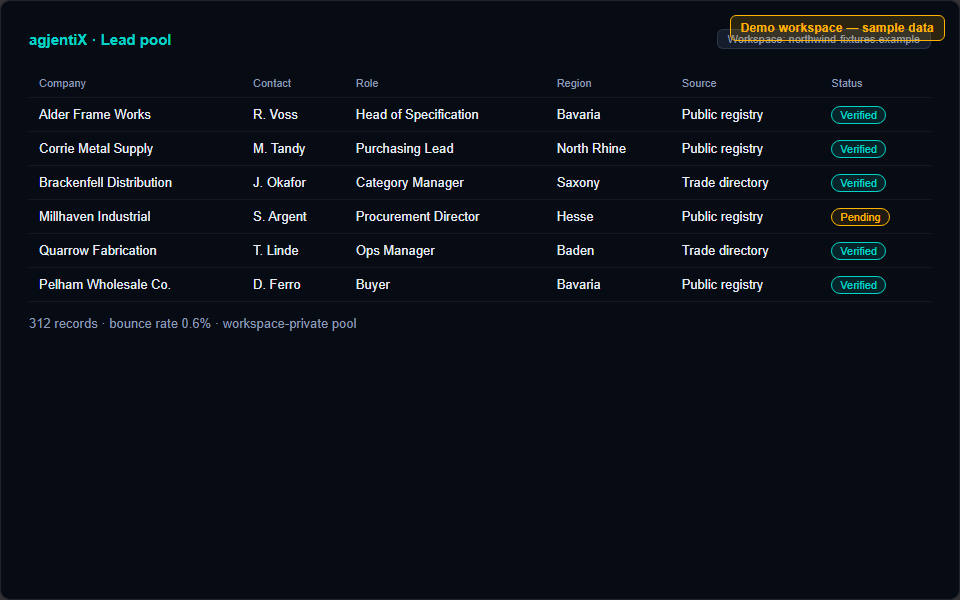
We build the list of companies and people worth contacting, from public sources, and verify every address before it enters a campaign. It's private to your workspace — nothing bought, nothing resold, nothing pulled from a marketplace dump other companies are also emailing.

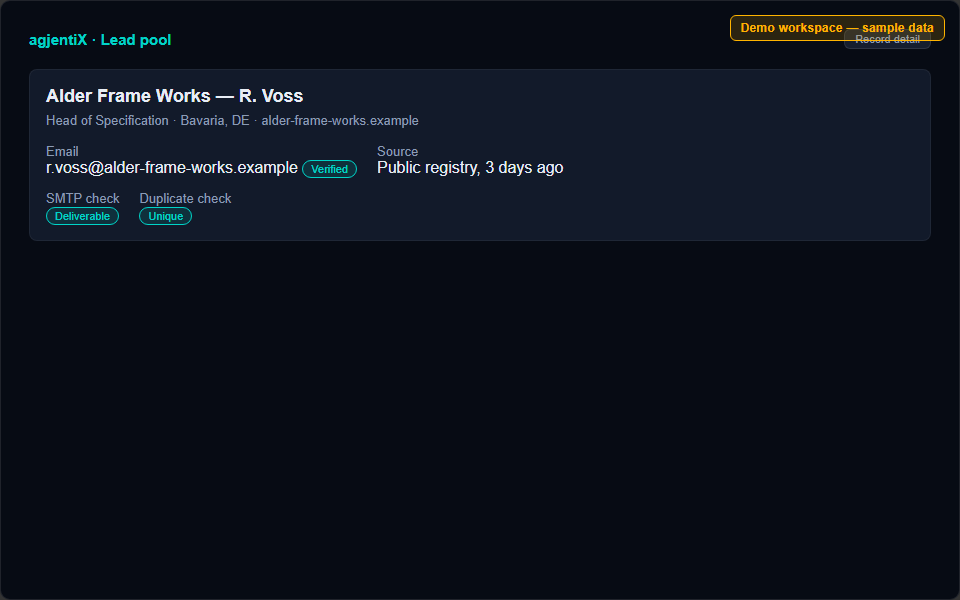
Every record carries a source and a verification status, so you can see where it came from and whether it's deliverable before it's ever used.

Lead pool list of verified companies with a source column, in a demo workspace. Single lead record showing verification status, in a demo workspace.

Reaching out and handling replies

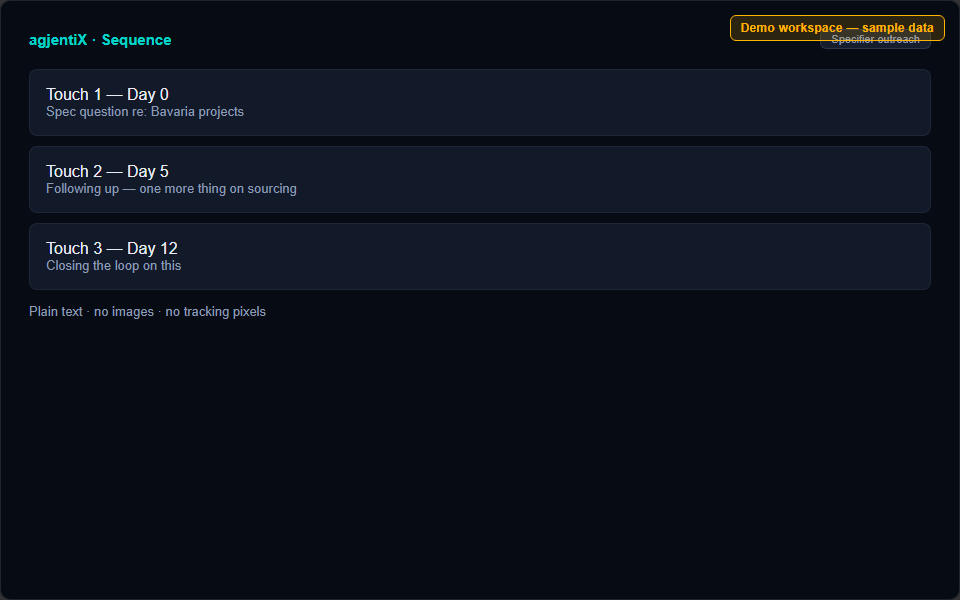
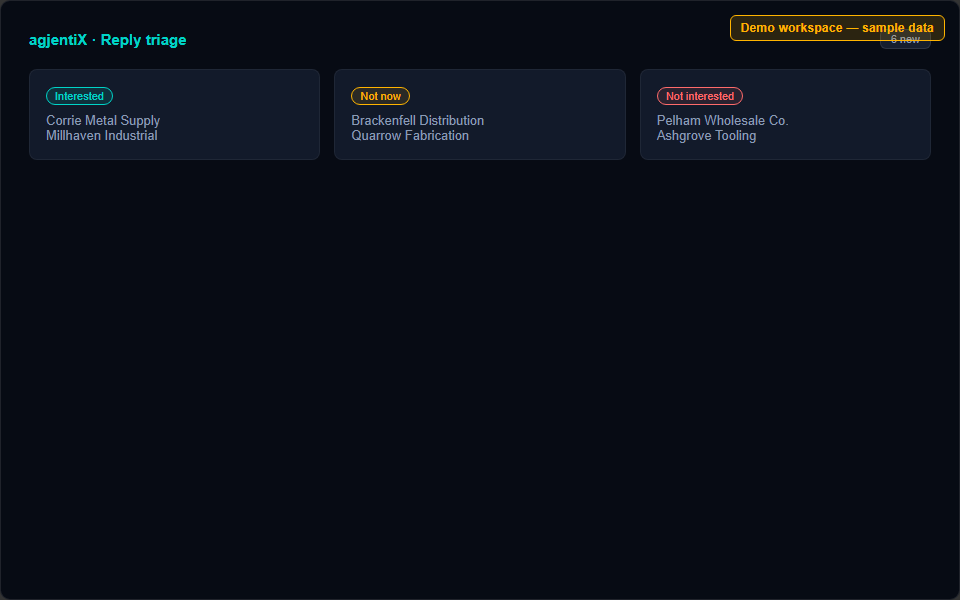
Sequences are written for your buyer and sent to you for approval before anything goes live. Plain text, no images, no tracking pixels. Replies are triaged daily and routed to you — interested, not now, or no.

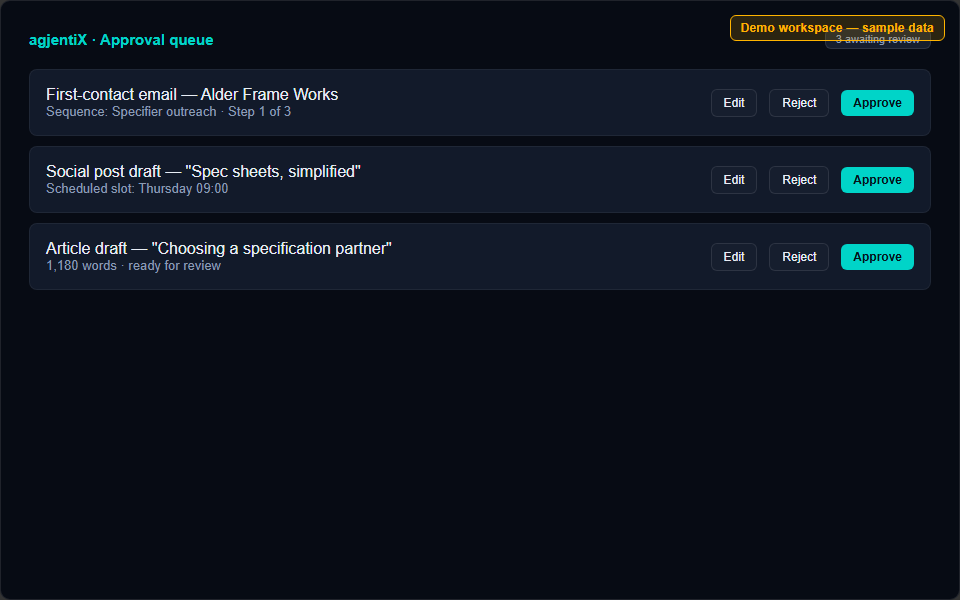
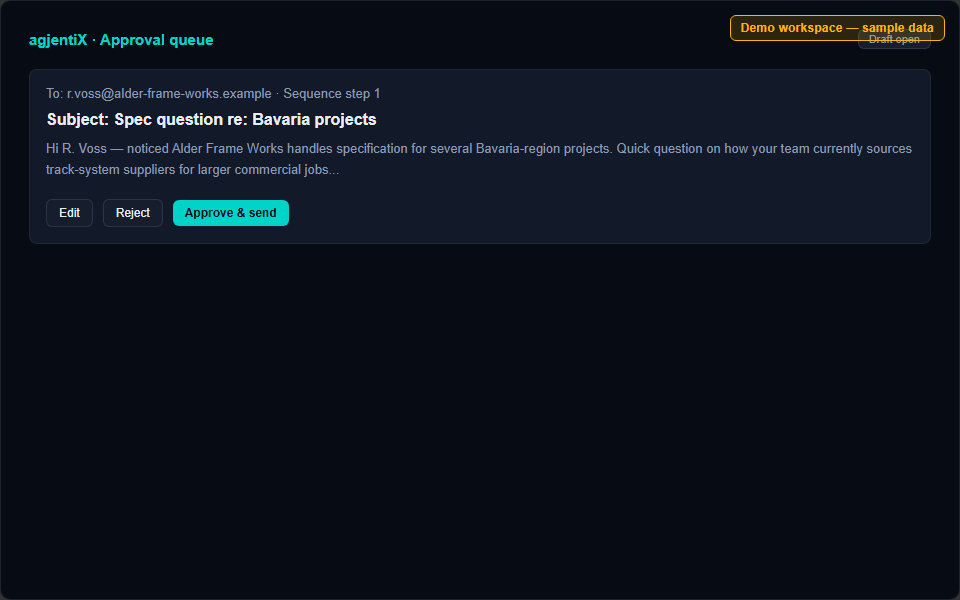
Approval queue with three outreach items awaiting review, in a demo workspace. A single email draft open with approve, edit, and reject controls, in a demo workspace. An outreach sequence showing three touches over twelve days, in a demo workspace. Reply triage sorted into interested, not now, and not interested, in a demo workspace.

Articles and search visibility

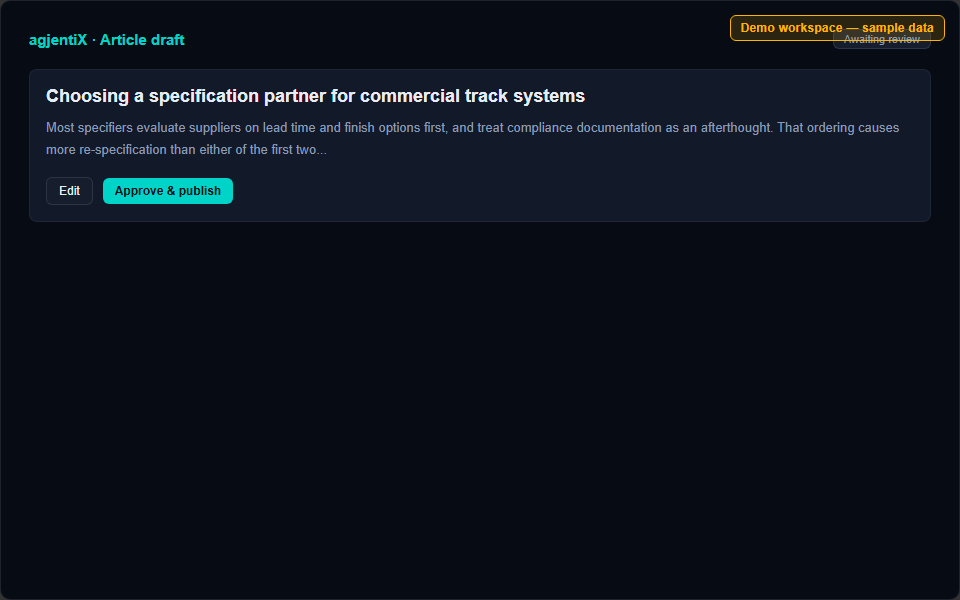
Long-form articles in your voice, on the questions your buyers actually type into a search bar, drafted for review and published on approval.

Article draft awaiting review, in a demo workspace.

Social posts and visuals

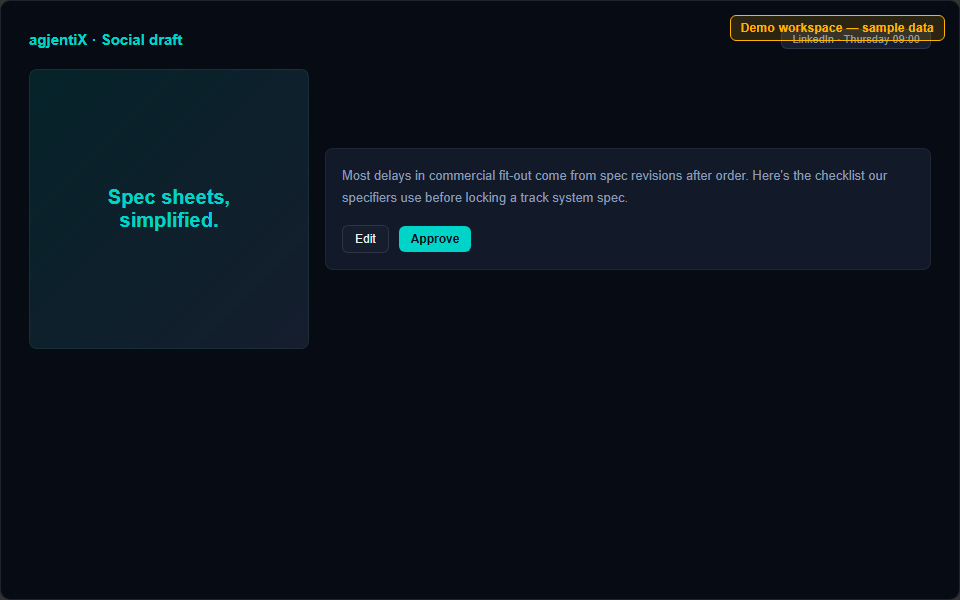
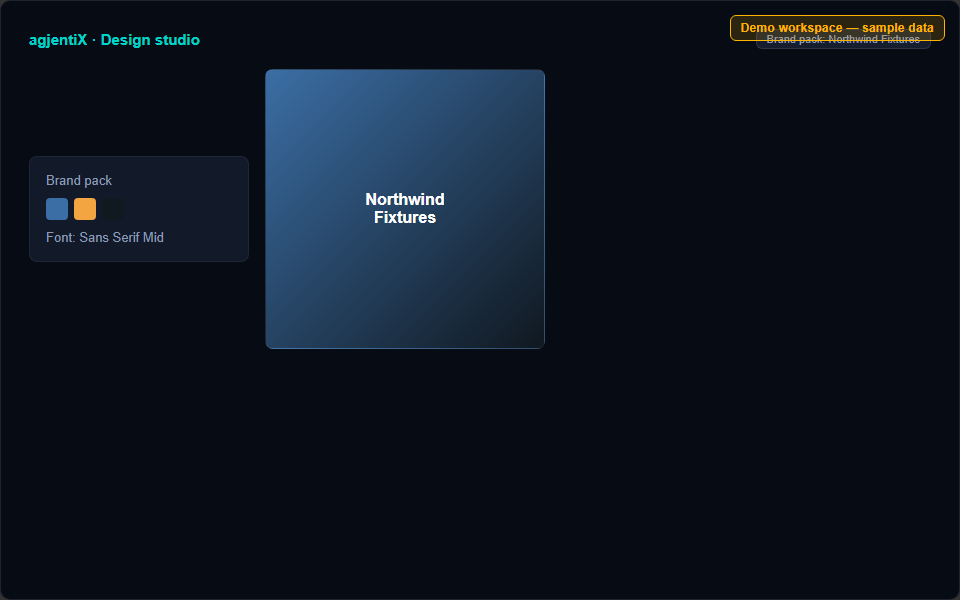
Regular posts with matching images, in your brand's language and style, with your brand pack applied automatically so what comes out looks like you made it.

Social post draft with a paired visual, in a demo workspace. Design studio with a brand pack applied to a post, in a demo workspace.

The thing that ties them together

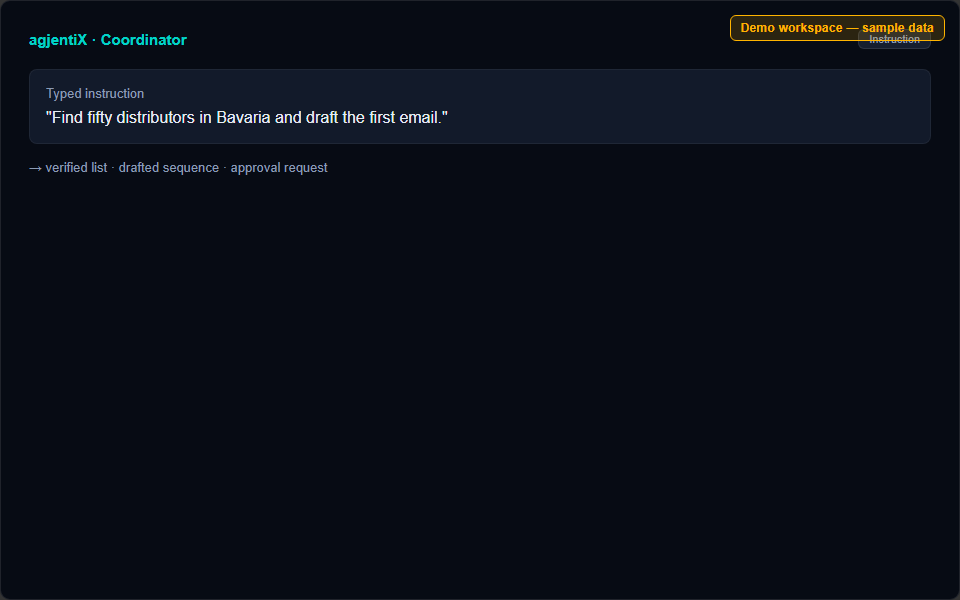
The four surfaces don't run as four separate tools that a human copies between. There's a coordinator underneath that we instruct in plain language, and it dispatches the work across all four. That's the difference between a stack of tools and a system: one instruction produces a verified list, a drafted sequence, and an approval request, in order, without anyone stitching it together by hand.

It has no authority you haven't given it. Everything it produces enters the same approval queue as everything else, at whatever setting you've chosen.

Demo workspace — sample data Coordinator interface showing a typed instruction and resulting queue items, in a demo workspace.

Typed instruction

Verified list — 50 distributors, Bavaria
Drafted sequence — 3 touches
Approval request — ready for review
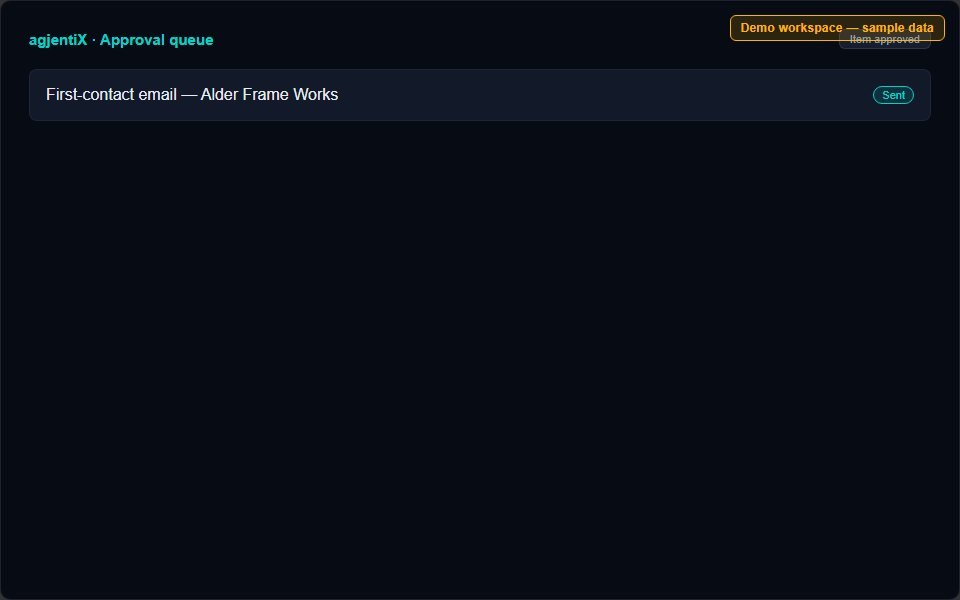
Demo workspace — sample data Approval queue item moving from awaiting approval to sent, in a demo workspace.

First-contact email — Alder Frame Works

Awaiting approval

You decide how much runs without you.

This is the part most AI marketing services get wrong. They sell full automation on day one and buyers are right not to trust it. We do it the other way around. Everything waits for you until you decide it doesn't have to.

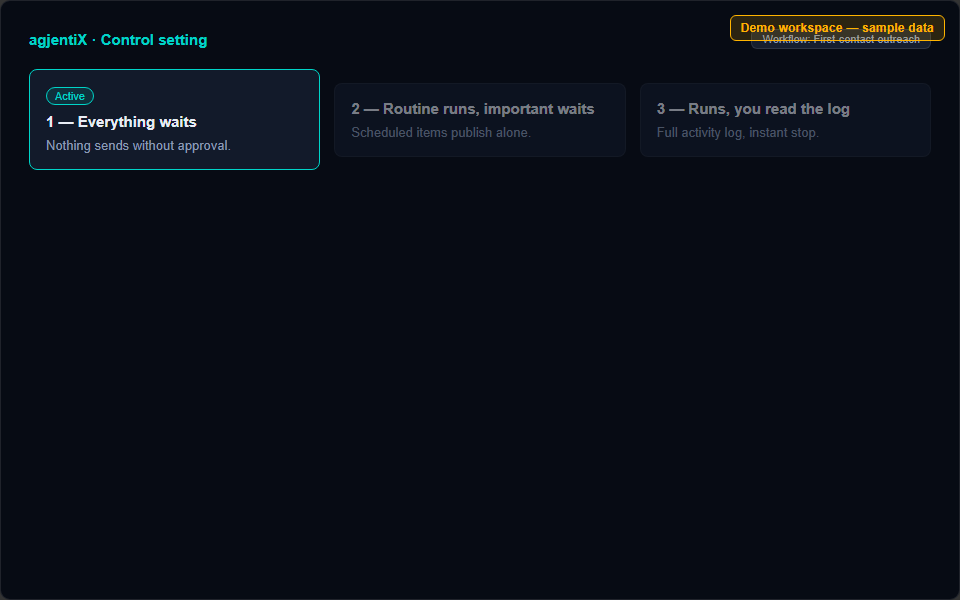
1

Everything waits

Nothing leaves the building without you clicking approve. Emails, articles, posts, all of it. This is where every engagement starts, without exception.

2

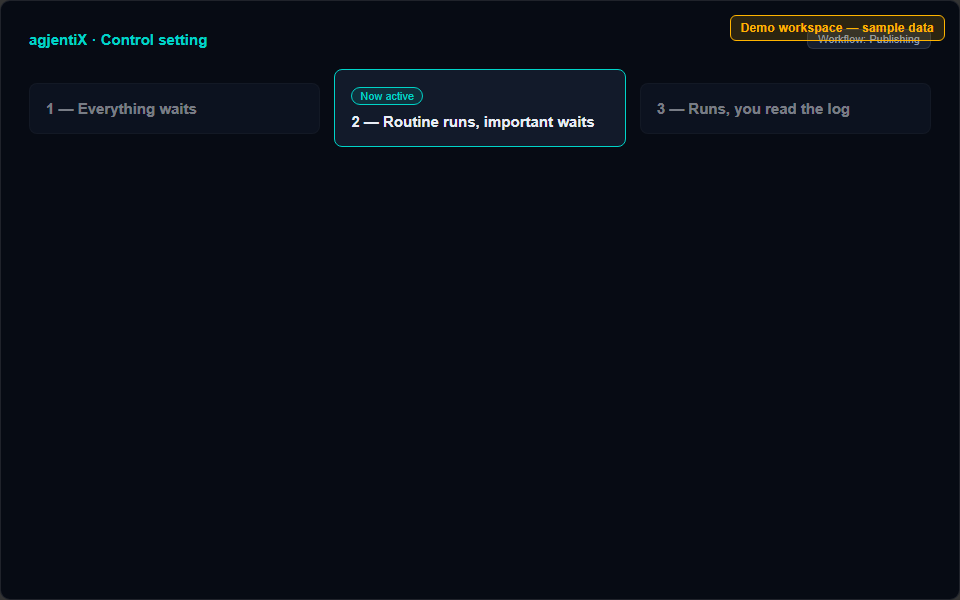
The routine runs, the important waits

Scheduled posts and approved articles publish on their own. First contact with a new company still waits for you.

3

It runs, you read the log

The workflows you've chosen run on their own. You get a complete record of what went out, and a stop control that takes effect immediately.

  • Every engagement starts at position one. No exceptions, no matter what you buy.
  • The setting is per workflow, not global. You can automate publishing and still approve every single email.
  • It moves both ways. If something goes wrong you move it back the same day.
  • We never move it for you. It changes when you say so, in writing.

In practice, most engagements sit split. Publishing runs on its own within a month or two, because the downside of a scheduled post going out is small and recoverable. First contact with a new company usually stays gated much longer, sometimes permanently, because that's the one where a mistake costs you a relationship. That split is normal and we don't push against it.

Control setting interface showing the three positions available for a workflow, in a demo workspace.
Demo workspace — sample data Control setting moved from position one to position two, in a demo workspace.
1 — Everything waits
2 — Routine runs, important waits
3 — Runs, you read the log

The part nobody sees and everybody skips

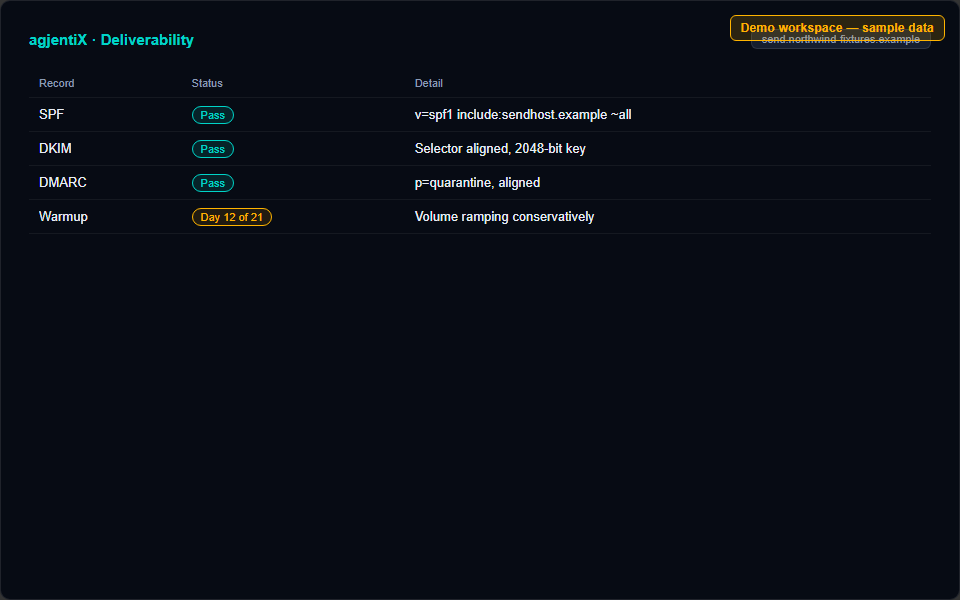
Domain and mailbox provisioning, SPF, DKIM and DMARC configuration, address verification, suppression list enforcement, and volume control per inbox. It's unglamorous and it's the reason most email programmes quietly stop working after month two. It's built once, monitored weekly, and it's the difference between mail arriving and mail vanishing.

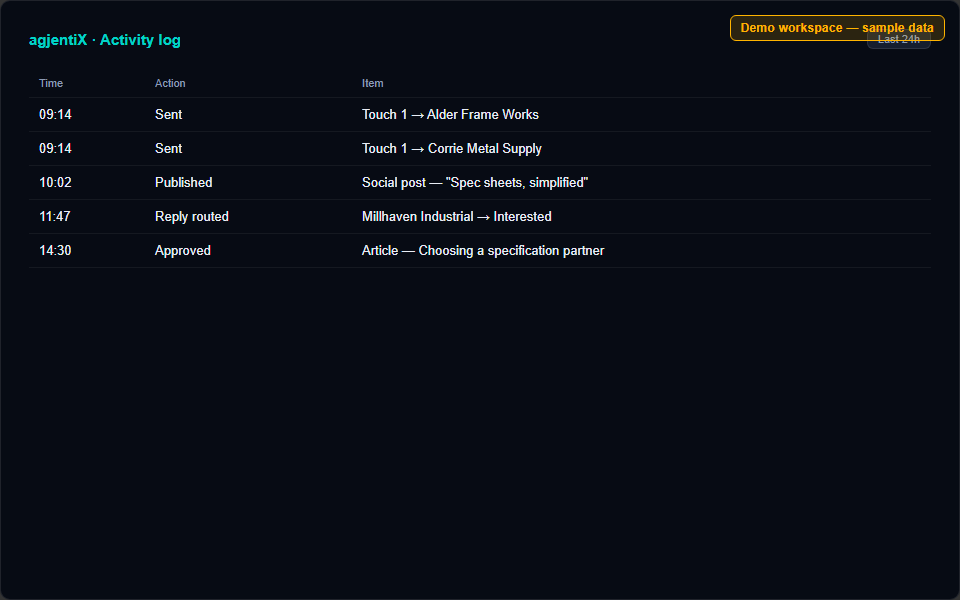
Deliverability panel showing SPF, DKIM, and DMARC status, in a demo workspace. Activity log recording what went out, in a demo workspace.

What we don't claim

We don't publish reply rates or ROI figures.

Not because they'd look bad. Because we can't source them yet, and a number you can't check is worth nothing. When there are client results we can put a name to, they'll be on this page.

We don't report open rates.

Open tracking requires an invisible pixel in every email. Pixels hurt deliverability, and the numbers they produce are inflated by security scanners opening mail nobody read. Our system doesn't have open tracking, on purpose. We report replies, because a reply is a real person.

The rest of what we don't claim

Start with a sample

Twenty-five verified contacts in your market and the first email we'd write. Two hours of our time, no obligation, yours to keep.